


Tripura's economic threads strengthened by GST cuts
Located in northeast India, Tripura is known for its scenic landscapes, vibrant culture, and rich heritage. Tripura is endowed with ecological wealth: ~60% of its area is under forest cover, while ~24% is cultivated land.
Often called the “Daughter of Mother Nature”, Tripura’s economy continues to rely heavily on agriculture and allied activities. Its agro-ecological conditions are ideally suited for diverse horticultural crops such as pineapple, jackfruit, and other tropical fruits.
The state is also a notable producer of tea and has strong potential in sericulture, owing to its favorable climate and traditional silk-rearing practices. Additionally, craftsmanship in Tripura's handlooms, handicrafts and traditional arts is eminent.
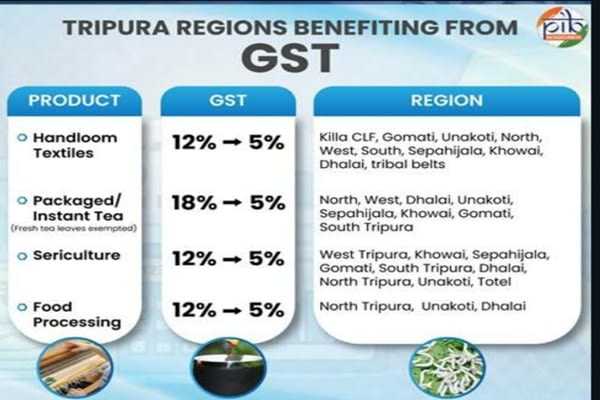
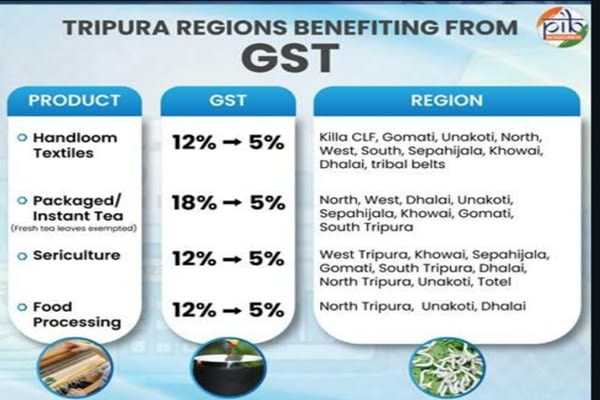
Notably, these sectors are witnessing new opportunities with lower GST rates revitalizing growth and competitiveness. Reduced tax slabs for handloom textiles, stitched apparel, few forms of tea, and sericulture products support local artisans, weavers, and farmers expand market reach while ensuring affordability for consumers.
By easing tax burdens and promoting local value addition, the GST reforms are strengthening Tripura’s rural economy, supporting employment, and reinforcing its position as a key contributor to India’s northeast development story.
Handloom Textiles: Handloom textiles is a well-recognized industry in Tripura. The traditional “Risa” and Tripura Pachra–Rignai have earned the significant Geographical Indication (GI) tag status. Notably, Tripura has more than 1.3 lakh households involved in handloom work. Tripura Risa Textile: The Tripura Risa Textile, a GI-tagged product, is rooted in the traditions of the Tripuri tribal communities.
Its weaving is widely practiced across tribal belts, particularly led by the Killa Mahila Cluster Level Federation (CLF) in the Gomati district. Tribal women-led and household-based, the craft relies on loin or backstrap looms. The Risa itself holds cultural significance- it is a customary handwoven cloth used as a headgear, stole, or upper garment for women, and is also offered as a token of respect and honor to distinguished guests in Tripura.
Supported and promoted by the Tripura Rural Livelihood Mission, Risa textiles primarily cater to domestic markets, symbolizing both identity and livelihood for the state’s tribal women. Recent GST revisions further boost this traditional craft, with fabrics now taxed at around 5%, and stitched apparel priced up to Rs.2,500 moved to the 5% slab from the earlier 12%. This 7-percentage-point reduction (12%→5%) for stitched Risa-based apparel (Rs.1,001–Rs.2,500 range) helps make Tripura’s indigenous textiles more competitive and accessible, enhancing income opportunities for rural women while preserving the state’s cultural heritage.
Tripura Pachra–Rignai Textile: The Tripura Pachra–Rignai Textile (GI-tagged) is woven across the tribal belts of Gomati, Unakoti, North, West, South, Sepahijala, Khowai, and Dhalai districts. Crafted by Tripuri women on loin or backstrap looms, these textiles form an integral part of Tripura’s cultural identity.
The Rignai (a skirt) and Pachra (a wrap/overskirt) are symbols of tradition and worn daily as well as during ceremonies. The market remains largely domestic, with sales done primarily through Purbasha and the Tripura Handloom & Handicrafts Development Corporation (THHDC), and at regional craft fairs, with a growing niche presence on curated online platforms.
Source : https://tripuratimes.com/ttimes/tripuras-economic-threads-strengthened-by-gst-cuts-32413.html