


Panel Flags 32 Issues in Income Tax Bill 2025, Seeks Clarity & Relief
In a significant development, the Select Committee of the Lok Sabha has tabled its detailed report on the Income-Tax Bill, 2025, presenting 32 substantive observations and recommendations aimed at improving clarity, coherence, and fairness in the proposed legislation.
The 4574-page report was submitted to the Lok Sabha on Monday by Committee Chairperson Baijayant ‘Jay’ Panda.
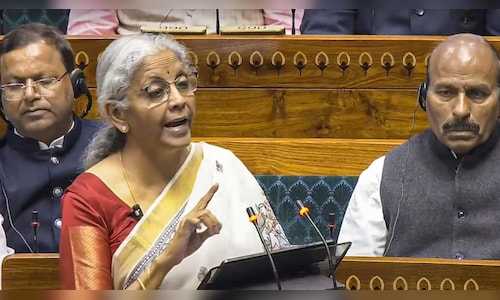
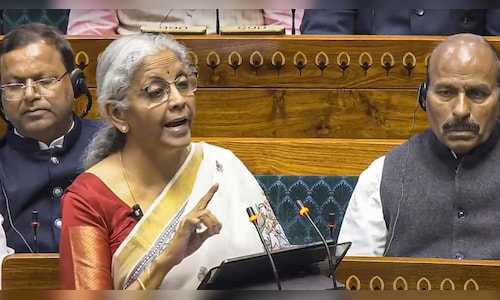
The Income-Tax Bill, 2025—introduced on February 13, 2025, by Finance Minister Nirmala Sitharaman and referred to the 31-member Select Committee the same day—seeks to comprehensively replace the Income-tax Act of 1961. However, in its examination of the new draft, the panel has raised critical red flags on definitions, drafting inconsistencies, and ambiguities that could potentially burden both taxpayers and administrators.
Clarity over complexity
A recurring theme in the panel’s report is the need to simplify definitions and avoid reliance on outdated references. The Committee recommended realigning the definition of "capital asset" under Clause 2(22) to reflect recent changes in the Finance Act, 2025, especially concerning securities held by foreign investors and investment funds.
Similarly, the definition of “infrastructure capital company” was flagged for being overly complex and dependent on references from the repealed 1961 Act. The panel advised directly incorporating the definition of "infrastructure facility" into the new bill to make it self-contained.
Definitions of terms such as “micro” and “small” enterprises, “parent company,” and “co-operative bank” also came under scrutiny, with the Committee urging alignment with corresponding laws or clearer articulation to prevent misinterpretation.
Making deductions more transparent
Several of the recommendations focused on improving the fairness of income computations and deductions. For example, Clause 22 on income from house property should explicitly state that the standard 30% deduction is to be applied after deducting municipal taxes. The panel also proposed allowing deductions for pre-construction interest not just for self-occupied homes but also let-out properties.
Other deductions requiring greater clarity include those for scientific research, where the Committee urged redrafting to specify when approvals are necessary, and for employer contributions to pension schemes, where the absence of the phrase “by such individual” could lead to disputes.
The Committee also recommended restoring the term “adjusted gross total income” in clauses dealing with donations to avoid accidental tax benefits beyond what is legally intended.
Protecting small taxpayers and NPOs
In a move likely to benefit small taxpayers, the panel criticized the existing requirement for filing an income tax return solely to claim a refund of tax deducted at source (TDS). It recommended the removal of such provisions, which could expose low-income individuals to unnecessary prosecution for non-filing.
Non-profit organisations (NPOs) also received special attention. The report highlighted multiple areas where ambiguities could harm charitable institutions—particularly those with both religious and charitable objectives.
The Committee recommended:
- Reintroducing the “religious-cum-charitable” category for exemptions on anonymous donations;
- Using “income” instead of “receipts” for taxability, in line with the principle of taxing real income;
- Retaining the concept of “deemed application” of income, which was omitted in the draft but is vital for entities facing delays in income utilization.
Plugging legal loopholes and ensuring continuity
The Committee called for redrafting clauses to better preserve legislative intent, especially around the computation of capital gains (Clause 79), carry-forward of losses (Clause 119), and refund eligibility when one person’s income is included in another’s (Clause 432).
A particular concern was the replacement of “shall” with “may” in penalty-related clauses (Clause 441), allowing authorities discretion in cases where non-compliance is not deliberate.
On the issue of tax avoidance, the panel backed the General Anti-Avoidance Rules (GAAR) provisions but insisted on reinstating the phrase “in the circumstances of the case” to ensure assessments consider the context and are not applied indiscriminately.
Administrative efficiency and modernisation
From revising timelines for liaison offices of foreign entities to redefining who qualifies as a valuer under the new law, the Committee’s recommendations also focus on improving administrative ease. It proposed an extended compliance window—from 60 days to eight months—for non-resident liaison offices and advised removing fixed application fees in advance ruling cases to allow flexibility through prescribed rules.
Lastly, Clause 536, which repeals the 1961 Act, was approved with recommendations to cleanly consolidate all references and preserve continuity through savings clauses.
Experts speak
Sandeep Jhunjhunwala, M&A Tax Partner at Nangia Andersen LLP, says, “Aimed at replacing the Income-tax Act, 1961, the report focuses on enhancing legal clarity, ensuring taxpayer equity, and facilitating a smooth legislative transition. The Committee has suggested modernising definitions such as "capital asset" and "infrastructure capital company," clarifying property-related deductions, and reinforcing the "actual payment" rule for business expenses. It has also recommended procedural safeguards such as making penalties for non-maintenance of books discretionary and permitting refund claims even where returns are not filed on time. Importantly, the report addresses concerns of charitable and not-for-profit entities by advocating clearer definitions, replacing "receipts" with "income" for tax purposes, and restoring the concept of "deemed application". Further, it urges inclusion of professionals under electronic payment norms, prescribes qualifications for valuers, and recommends contextual fairness in GAAR provisions. On transition, the Committee calls for eliminating residual references to the 1961 Act to make the new code self-contained and litigation-resistant. The recommendations clearly reflect a legislative intent to establish a more cohesive, administratively efficient, and jurisprudentially robust direct tax regime.”
Rohinton Sidhwa, Partner, Deloitte India, says, “The larger set of amendments in the latest round are corrective and meant to fix errors in drafting from the first draft released for public comment. For example, the second source rule in respect of royalties payable by a non-resident referred to royalty payable in respect of any right, property or information used or services utilised for the purposes of making or earning income from any source outside India rather than ‘in India.’ The provisions of the bill are now aligned to the original act.”
Gouri Puri, Partner, Shardul Amarchand Mangaldas & Co also believes that the report has stayed true to its intent of the Income Tax Bill being a textual simplification exercise as against a policy re-write. Puri says, “a major relief, the Committee has noted that the benefit of tax deduction relevant to inter corporate dividends in multi-tiered structures must also be extended to companies that elect the 22% tax rate (as is currently the case). While the market had expected this to be an oversight, corporates had begun factoring in the cascading impact of dividend taxes in tiered structure in the absence of any clarification. This is indeed a welcome change. On the other hand, several stakeholders had urged the Parliamentary Committee to reconsider the extent of search and seizure powers in relation to virtual digital space in light of safeguarding privacy and third-party rights, risk of overboard searches, etc.. However, at first blush, no key changes seem to have been recommended.”
What's next?
With these 32 suggestions, the Committee has provided a roadmap for refining the new income-tax legislation—balancing simplification with safeguards, and modernization with continuity. Whether the government chooses to adopt these recommendations in full or part remains to be seen, but their implications for individuals, businesses, and civil society could be far-reaching.