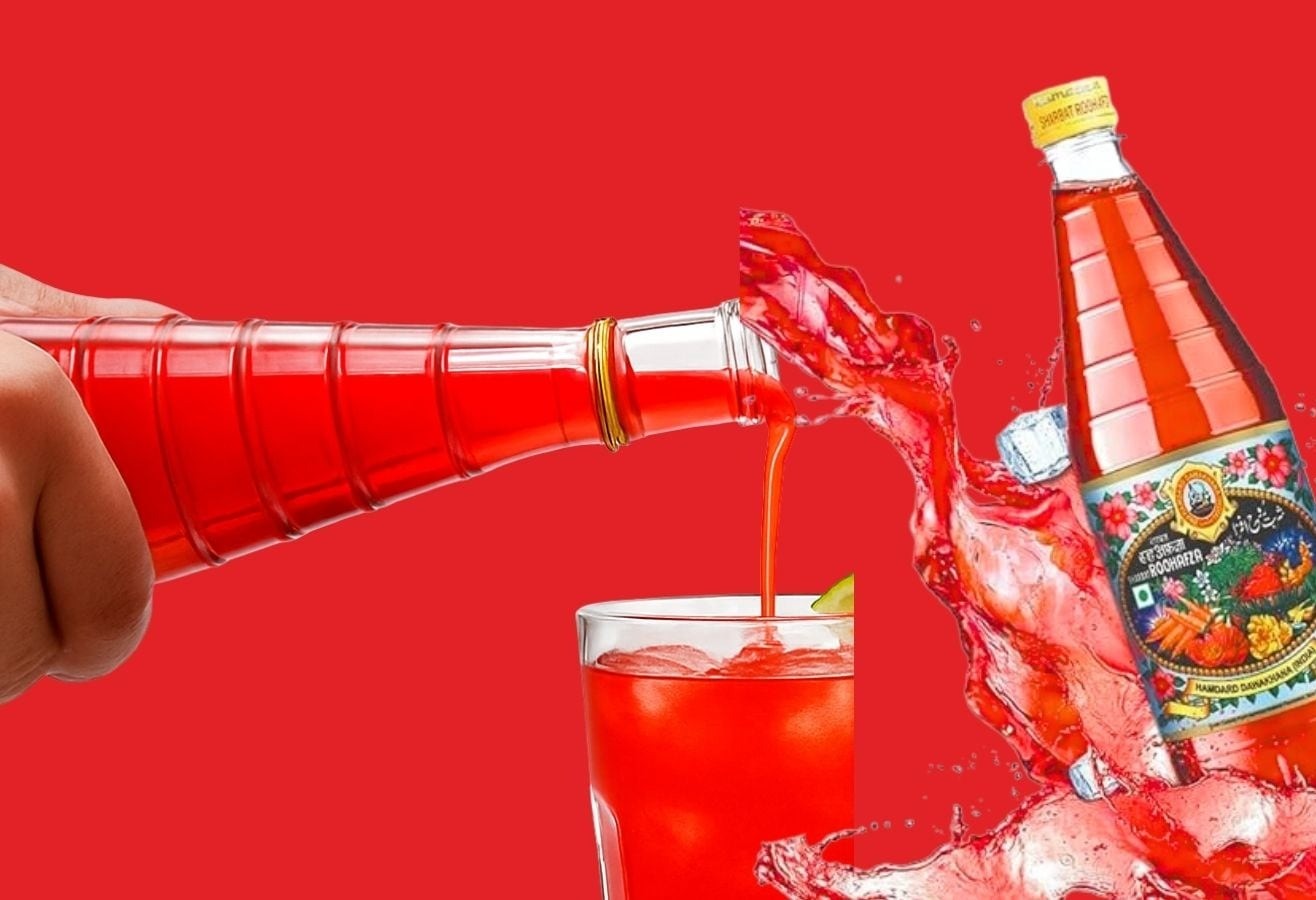



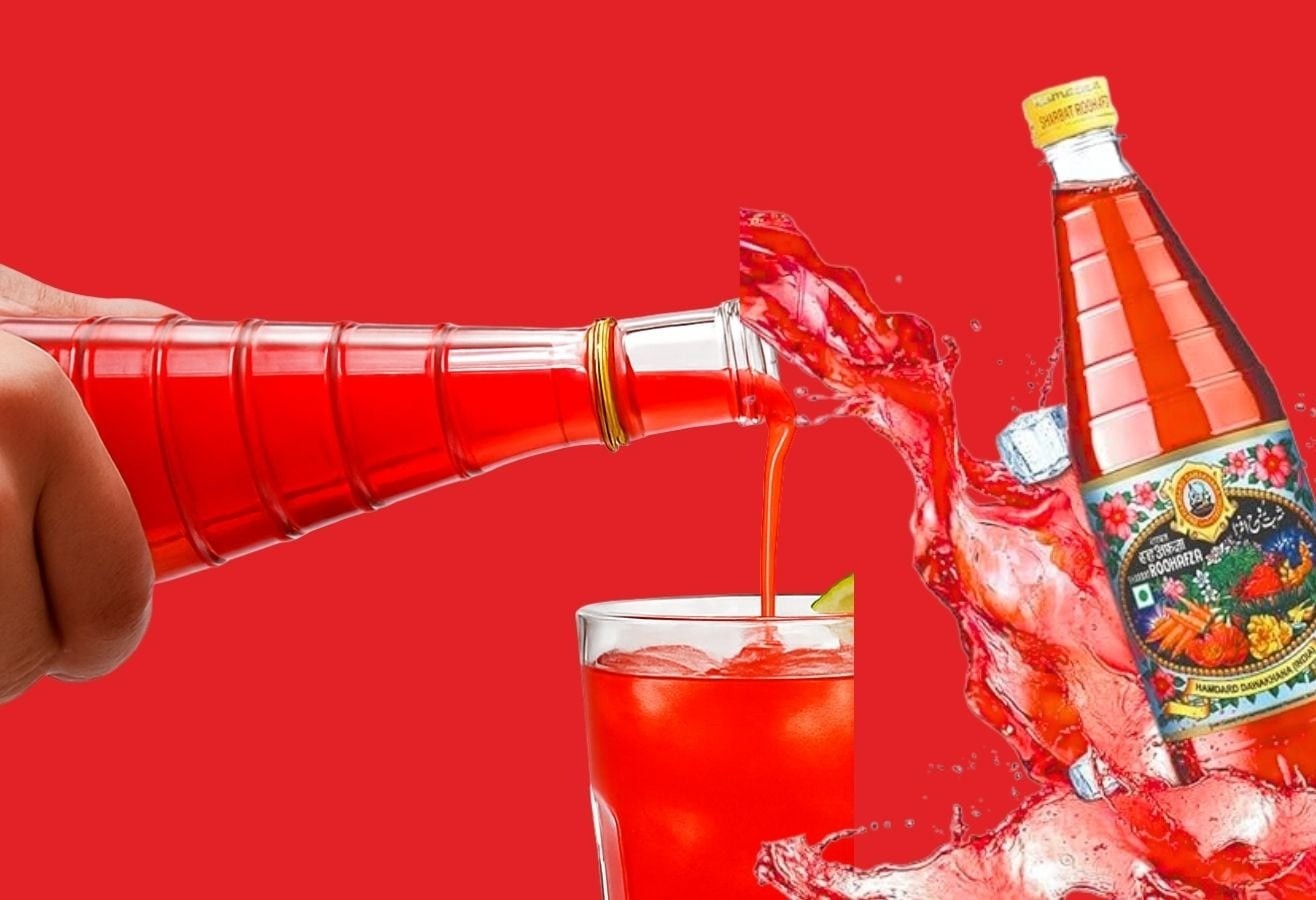
Is Rooh Afza fruit drink? Supreme Court ends decade-long tax war for Hamdard’s iconic ‘sharbat’
Supreme Court Rooh Afza ruling: The Supreme Court, granting relief to Hamdard Laboratories, set aside the Allahabad High Court’s denial of categorising it as a fruit drink, holding that “Sharbat” comes under a fruit beverage taxable at 4 per cent instead of 12.5 per cent.
Supreme Court’s Justice R Mahadevan was hearing the Hamdard Laboratories plea challenging the high court’s 2022 verdict seeking to classify “Sharbat Rooh Afza” within the ambit of “fruit drink” under the UPVAT, opposing the tax authority’s assessment, labelling it under the residuary entry.
Observing the composition of the product “though invert sugar syrup constitutes approximately 80 per cent by volume, its function is essentially that of a carrier, sweetening medium and preservative base”, the Supreme Court held it does not determine the beverage identity of the product.
The Supreme Court on February 25 further noted that ‘Roof Afza’ reasonably answers the description of a ‘fruit drink’, and it cannot be denied merely on account of its label or regulatory categorisation.
‘Sharbat Rooh Afza,’ fruit drink or not
- The product’s distinctive character is as a flavoured sharbat intended for dilution and consumption as a refreshing drink.
- In common trade understanding, fruit squashes, concentrates, and sharbat preparations intended for dilution are all capable of being understood as fruit drink preparations.
- The nomenclature “sharbat” does not strip the product of its essential character as a fruit-based beverage.
- Entry 103 covers processed or preserved vegetables and fruits; it does not prescribe any minimum threshold of fruit content.
- The expression “fruit drink” occurring in Entry 103 cannot be confined solely to ready-to-consume bottled beverages.
- If common parlance and essential character tests reasonably answer the description of the product as a “fruit drink”, the same cannot be denied merely on account of its label or regulatory categorisation.
- “Sharbat Rooh Afza” is classifiable under Entry 103 of the UPVAT Act as a fruit drink / processed fruit product and is exigible to VAT at 4 per cent during the relevant assessment years.
- The judgments affirming classification under the residuary entry and levy at 12.5 per cent are set aside.
- Hamdar’s appeal is allowed, and consequential relief, including refund or adjustment of excess tax paid in accordance with the law granted.
Commercial identity of products
- Food laws operate in controlling quality, setting safety standards and licensing; they do not classify taxes unless they are clearly adopted by the taxation laws.
- The documents produced by the Hamdard, including dealer testimonials and other material documents evidencing market understanding, were not adequately considered.
- The tax authority seeking to classify the product under residuary from that claimed by the assessee, the burden lies squarely upon the department.
- The tax authority has failed to discharge the burden cast upon it to prove that “Rooh Afza” is liable to be taxed under the residuary.
- Though invert sugar syrup constitutes approximately 80% by volume, it does not determine the commercial or beverage identity of the product.
- The dispute pertains to the period from January 1, 2008, to March 31, 2012.
- Since the issue involved in all these appeals is identical and the parties are the same, they were heard in parallel and are being disposed of by this common judgment.
- The company was granted a license in 1972, which allowed it to manufacture fruit syrups and squashes, and non-fruit syrups/sharbat under the FPO and the Prevention of Food Adulteration Act, 1954.
- The product “Sharbat Rooh Afza” admittedly contains 10 per cent fruit juice (8 per cent pineapple juice and 2 per cent orange juice) along with 80 per cent invert sugar syrup.
- The company’s contention that solely based on the classification of the product under food laws cannot interpret tax imposition under the UPVAT Act is accepted.
- The high court relied on food laws and a license instead of noting the commercial perception of the product, which stands contrary to the common parlance test.
10 per cent fruit content
- The counsel for the tax authority submitted that even if Hamdard claimed their product as “Sharbat” containing 10 per cent fruit content, Entry 103 does not include either “Sharbat” or “fruit juice” within its ambit.
- After consideration, the assessing officer rejected Hamdard’s claims and categorised the product under residuary and levied tax at 12.5 per cent.
- It was submitted that, in accordance with the Fruit Product Order, 1955, the company’s license allowed them to manufacture “non-fruit syrup/sharbat,” containing less than 25 per cent fruit juice, labelled as “non-fruit”, and could not be treated as “fruit drink” for tax purposes.
- The mere presence of 10 per cent fruit content, admittedly reduced now, did not qualify the product as a fruit drink, particularly when a minimum 25 per cent fruit juice content is required to qualify as a “fruit drink” as prescribed by FPO.
- Subsequently, it was submitted that the word “shall” in the FPO renders a mandate, leaving no discretion with the manufacturer to object to the Order and mislead the consumers.
- The counsel contended that applying the common parlance test, “Sharbat Rooh Afza”, containing only 10% fruit juice and being marketed and labelled as a non-fruit syrup, cannot be regarded by consumers or traders as a “Fruit Drink”.
Within the ambit of Entry 103
- It was submitted that merely because the product contains some quantity of fruit extract, it does not automatically qualify as a fruit drink within the meaning of Entry 103.
- The counsel submitted that all the authorities below had consistently applied the common test and had concurrently held that the product does not fall within Entry 103 but is an unclassified item taxable under the residuary entry.
- It was further submitted that the high court, while dismissing the revision petitions, recorded concurrent findings of fact and relied upon the precedents concerning Hamdard, holding the product to be a sugar-based or non-fruit syrup.
- It was also submitted that under the earlier UP Trade Tax Act, 1948, the product was taxable at 16%, and upon enactment of the UPVAT Act, it was taxed at 12.5%; hence, there was no sudden or excessive increase in the tax burden as alleged by the company.
Evolution of statutes governing sales tax/VAT
1. Pre-VAT Regime: UP Tarde Tax, 1948
- The said Act provided for the levy of tax either at the first stage of sale/purchase or at the last stage of sale on specified goods.
- In 1981, “Sharbat Rooh Afza” was classified under soft beverages taxed at 12 per cent.
- In a 2005 decision in Hamdard v. Commissioner of Sales Tax, the product was treated as a “syrup” as it was essentially a sugar-based concentrate.
- Subsequently, in 2005, “Rooh Afza” was taxed at 16 per cent for sugar juices and soft drinks.
2. VAT Regime: UP Value Added Tax Act, 2008
- With effect from January 1, 2008, the UPVAT Act, 2008 came into force, repealing the Uttar Pradesh Trade Tax Act, 1948.
- Under UPVAT, Entry 103 taxes fruit juices and fruit drinks at 4 per cent.
- The company claims “Sharbat Rooh Afza” within the “fruit juice” category as above; however, the tax authority has classified it under residuary applicable to be taxed at 12.5 per cent.
3. Post-VAT Regime: GST
- After the 101st Constitutional Amendment, GST replaced VAT, and under GST, fruit-based drinks fall under Tariff Heading 2202 and attract 2.5% CGST.