


Higher GST for kraft paper irks corrugated box manufacturers
The Rs.40,000-crore corrugated packaging industry is upset with changes made to the Goods and Services Tax (GST) from September 2025, as tax on its raw material has been increased to 18 per cent, even as the levy on the finished goods has been cut to 5 per cent.
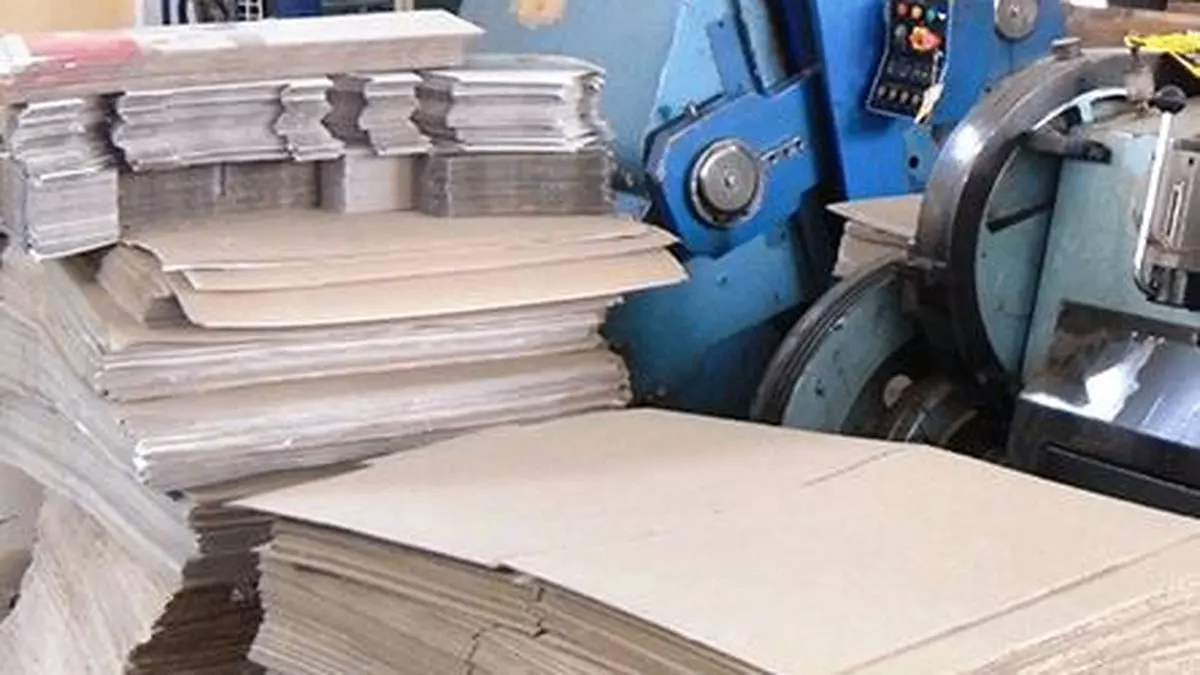
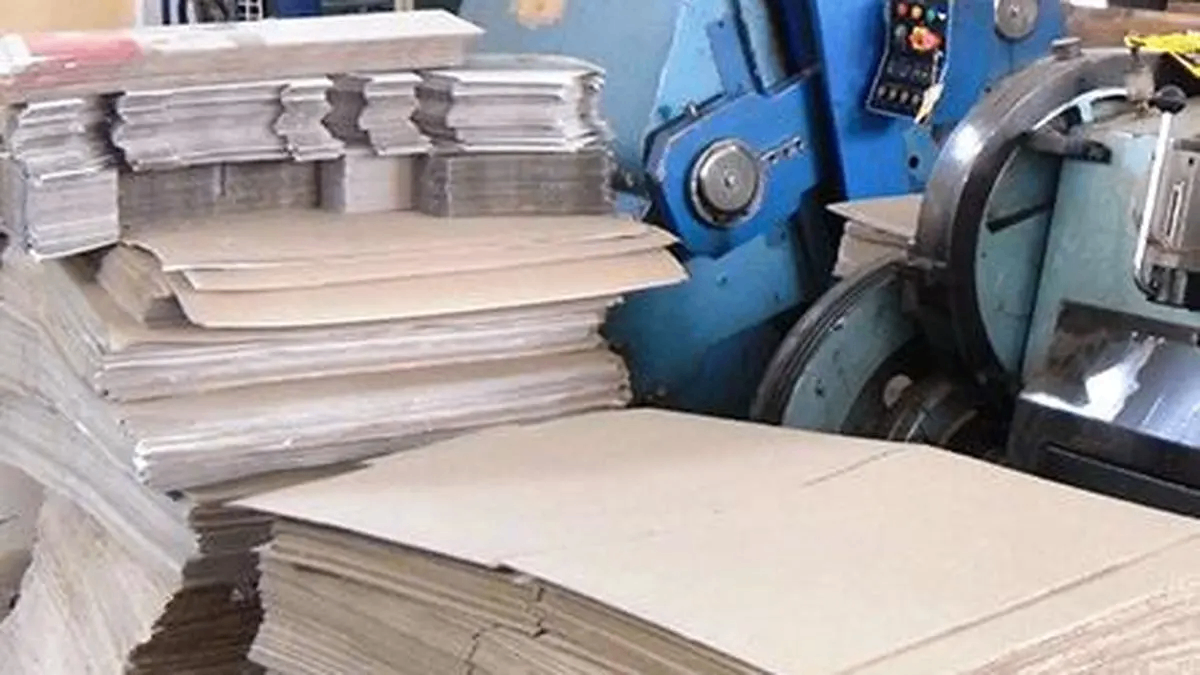
The corrugated packaging industry mainly comprises micro, small and medium enterprises (MSMEs) and manufactures the brown boxes that is used in food, agricultural produce, medicines, electronics, textiles, engineering goods and e-commerce shipments.
“The intention of the government is right in reducing the GST on corrugated boxes to 5 per cent, so that farmers, in particular, will not be affected. However, the GST on kraft paper is 18 per cent. As a result, manufacturers consistently accumulate a massive input tax credit that cannot be fully utilised against their output tax liability,” said Rishabh Agarwal, President of Indian Corrugated Case Manufacturers Association (ICCMA).
All MSMEs
Every manufacturing policy announced by the Government ultimately depends upon efficient packaging. “If India wants to become a global manufacturing and export hub, the industries that enable manufacturing must also remain financially competitive. It is about strengthening India’s manufacturing value chain,” he said.
Over 15,000 manufacturing units produce corrugated boxes and all fall within the ambit of the MSME sector.
Agarwal told businessline in an online conversation that the corrugated packaging industry is not asking for tax concessions or financial incentives. “We are simply seeking restoration of GST neutrality. A tax structure should encourage value addition,” he said.
Kirit Modi, former ICCMA president, said Rs.366 crore of industry working capital is locked every month due to the lack of neutrality in the GST. “For corrugated box manufacturers, this structure requires urgent correction,” he said.
Locked funds
Chennai-based industry veteran Vikash Goel said few manufacturing sectors can claim such widespread economic relevance as the corrugated box industry. “Every policy aimed at promoting domestic manufacturing, exports, logistics or e-commerce ultimately depends on reliable and cost-effective packaging,” he said..
He said funds that would otherwise be deployed towards technology upgrades, automation, capacity expansion, employee development or exports are locked in tax credits.
“Rather than improving liquidity, the revised GST structure has unintentionally reduced it,” said the veteran.
Modi said for the MSME corrugated box industry, blocked tax credits translate directly into higher borrowing requirements and increased finance costs.
Time-consuming process
Harish Madan, Immediate Past President, ICCMA, said though refund mechanisms exist under GST, the process is often time-consuming, documentation-intensive and administratively burdensome. “Delayed refunds further compound cash-flow pressures for businesses that already operate on tight margins,” he said.
The issue extends beyond raw materials, said Agarwal. Input tax paid on many services and on capital goods is not fully refundable under the present framework, effectively increasing the cost of new investments. “For a sector that requires continuous modernisation to improve quality, productivity and sustainability, this acts as a disincentive to technological advancement,” he said.
Corrugated packaging is biodegradable, recyclable, renewable and forms part of a well-established circular economy based on recovered fibre, said Goel.
“Compared with many alternative packaging materials, corrugated boxes already meet several environmental objectives without requiring additional incentives,” he said.
Supporting such an industry is, therefore, not merely an industrial policy decision; it also advances national environmental goals, said Modi.
He said the industry’s demand was neither for subsidies nor tax concessions. “We are restoration of GST neutrality—the foundational principle that taxes should not become a cost in the production chain,” he said.
He said ICCMA, together with industry stakeholders and professional advisors, has cchosen constructive engagement over confrontation.
“Detailed representations have been submitted and discussions held with policymakers at multiple levels. We appreciate the Government’s openness to hearing industry concerns and remain hopeful that this long-standing anomaly will be addressed through GST rationalisation,” said Madan.
Agarwal said representations have been submitted to the Finance Minister Nirmal Sitharaman, senior officials in the Ministry of Finance, GST Council members, the GST Fitment Committee, and various State Governments.
Goel said the government can cut the GST on kraft paper to 5 per cent or raise the GST on corrugated boxes to 18 per cent, with full input-credit flow.