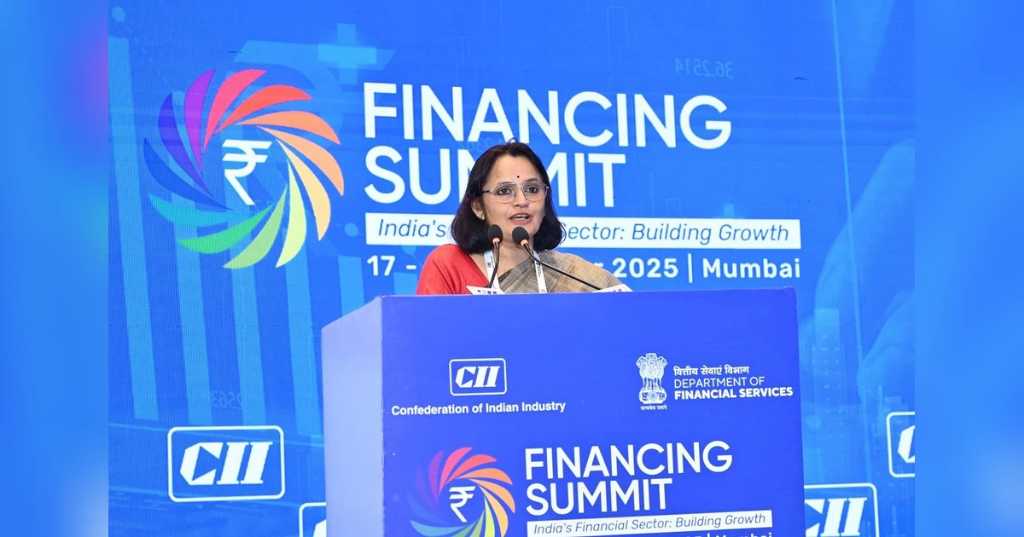



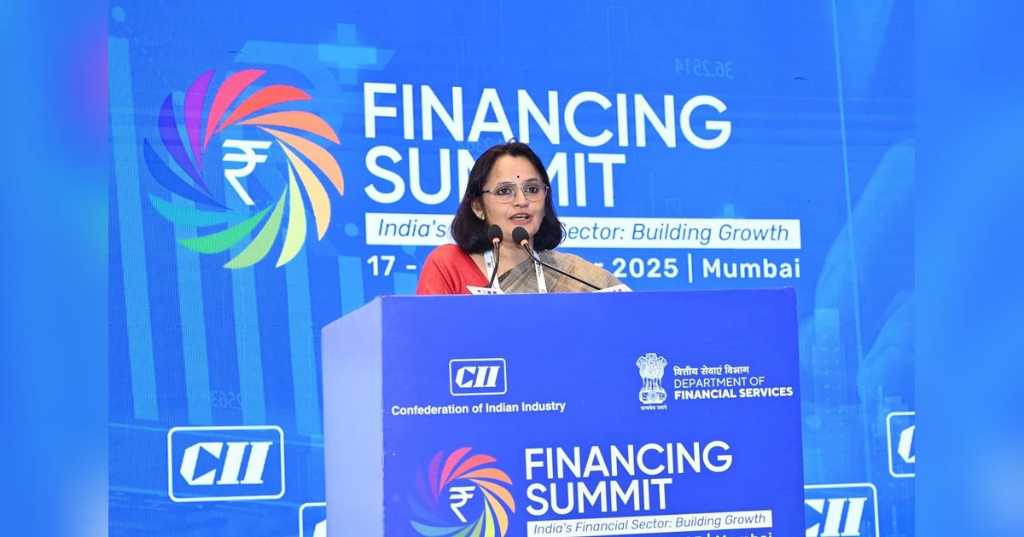
GST reforms expected to ignite animal spirits in financial sector: DEA secy
Noting that recent uncertainties created by global tariffs have not impacted the Indian economy severely, Anuradha Thakur, secretary, Department of Economic Affairs, said the central government is hopeful that the recent goods and services tax (GST) rationalisation will ignite the much needed animal spirit in the financial sector.
In September, the GST Council rationalised GST rates across various categories to stimulate consumption in the economy. Combined with the income tax relief provided to the middle class through higher exemption limits under the new tax regime, and the 100-basis-point cut in the repo rate that has made borrowing cheaper, bankers say these measures have resulted in green shoots in the economy. They aim to capitalise on this momentum in H2FY26 by expanding credit disbursal.
Speaking at a CII event in Mumbai, Thakur noted that the Indian financial sector has grown to be one of the most stable amongst emerging economies.
“The financial sector, which was plagued by the twin balance sheet problem in the last decade, has moved to become more strong, inclusive, innovative and now is a catalyst and reflection of India's economic transformation”, she said.
Thakur said that this has been made possible due to several measures targeted at recapitalisation of public sector banks, strengthening NPA recovery mechanisms, and healthy resolution practices as well. The Insolvency and Bankruptcy Code (IBC) has also played a major role in this.
She also highlighted that for India to meet its goal of a sustained 8 per cent gross domestic product (GDP) growth target, India needs a lot of investment to flow in and therefore the entire financial system, banking system as well as capital markets assume a pivotal role in channeling savings towards investments in productive segments of the economy.
Thakur also touched upon the shift in the financial sector in the form of rising financialisation of savings — a shift from bank deposits to mutual funds and equities.
“In the last five years, the mutual fund AUM has more than tripled and bank deposits have grown by a little over 70 per cent. Within banks, it is the low cost Casa deposits which are showing a declining trend, reducing the net interest margin for banks. On the credit side, financing from non-bank sources seems to have increased, reflecting higher reliance on market-based funding,” she said, adding that the share of banks in total credit is down from 77 per cent in 2011 to close to 60 per cent in 2022.