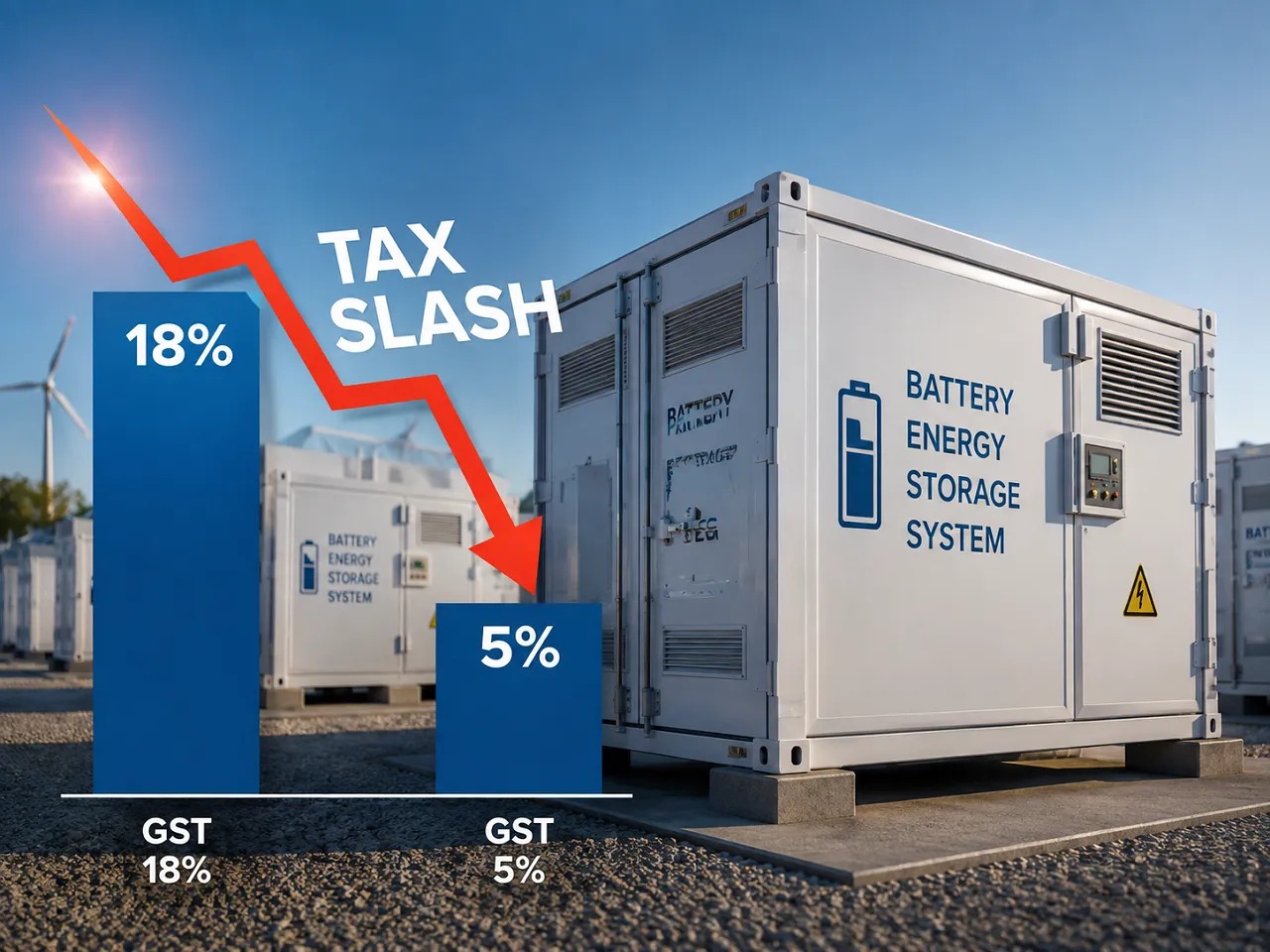



GST Cut to 5% for BESS Can Accelerate India's Energy Storage Push, Industry Says
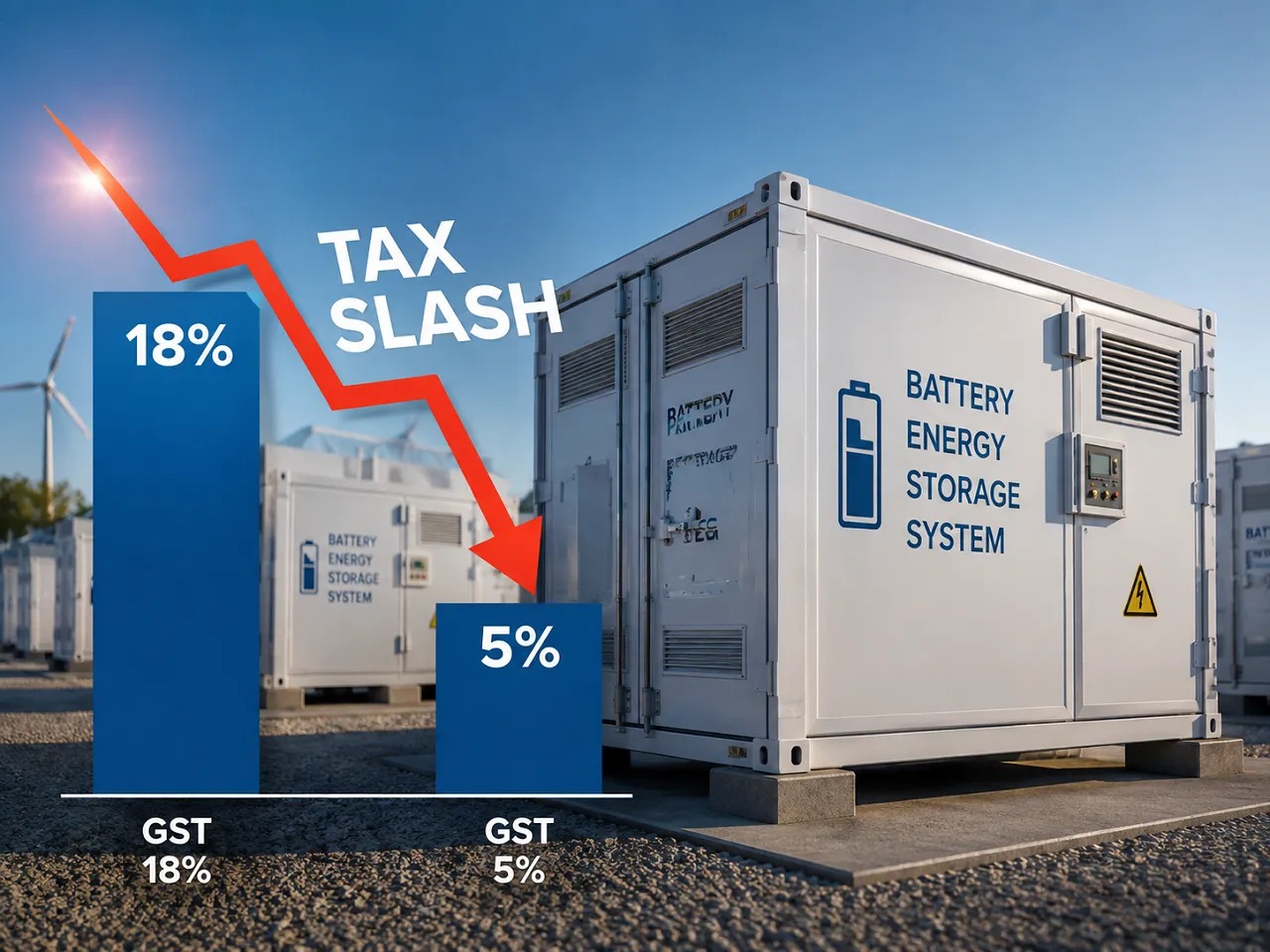
Industry leaders working in the Indian energy storage landscape have backed a proposal to reduce the Goods and Services Tax (GST) on standalone utility-scale and containerised Battery Energy Storage Systems (BESS) from 18% to 5%, saying the move could significantly improve project economics, boost domestic manufacturing and accelerate India's clean energy transition.
The support comes after renewable energy developers urged the government to align the GST on standalone BESS with other renewable energy equipment such as solar modules. In a representation to the Ministry of New and Renewable Energy (MNRE), the National Solar Energy Federation of India (NSEFI) said the existing 18% GST makes energy storage projects less competitive despite their growing importance in integrating renewable energy into the grid.
Industry executives say lowering the tax burden would reduce upfront capital costs, improve the financial viability of projects and encourage faster deployment of battery storage systems across utility-scale, commercial and industrial applications.
Udyut Goyal, Business Development Head at AmpereHour Energy, described the proposal as a timely policy intervention, noting that energy storage has become a critical enabler of India's rapidly expanding renewable energy capacity.
"While renewable energy capacity has grown rapidly, large-scale energy storage is now the critical enabler that will ensure this power can be stored, dispatched when needed, and integrated reliably into the grid," Goyal said.
According to him, reducing GST to 5% would directly improve project economics by lowering the initial capital burden on developers and utilities, thereby enhancing project bankability and attracting greater investment into storage infrastructure.
He added that the policy would have benefits beyond project finances by helping reduce renewable energy curtailment, strengthening grid stability and enabling round-the-clock clean power supply. Goyal also said the measure could stimulate domestic manufacturing by boosting demand, encouraging capacity expansion and fostering innovation in advanced battery technologies under the government's 'Make in India' initiative.