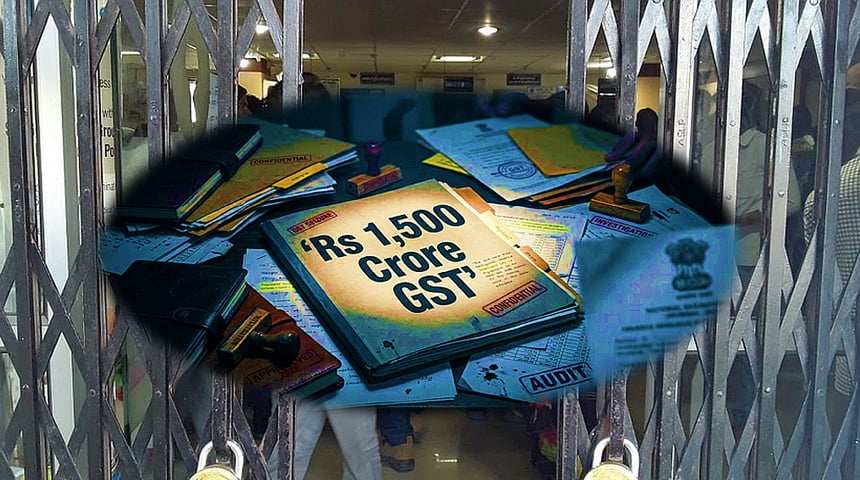



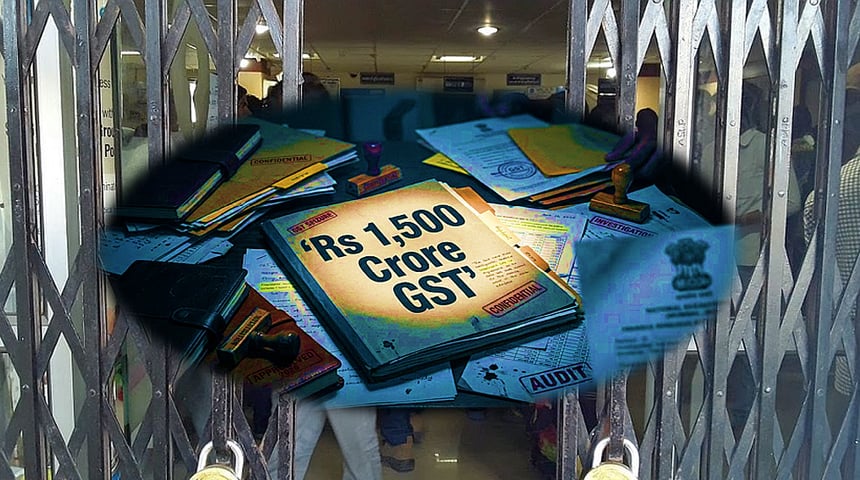
Rs.1,500 Crore GST on Loan Penal Charges: Massive Collections, No Answers on Refunds
In August 2023, the Reserve Bank of India (RBI) set out to correct a long-standing unfair practice in lending. Through its circular (now withdrawn) DoR.MCS.REC.28/01.01.001/2023-24 dated 18 August 2023, it directed banks and non-banking finance companies (NBFCs) to abolish the practice of charging penal interest—interest on interest—and replace it with transparent, one-time penal charges.
The intent was unambiguous. Penal charges were to be reasonable, non-discriminatory, and, importantly, not to be capitalised. Borrowers were not to be punished through compounding. It was, on paper, a decisive move in favour of fairness.
Yet, what followed reveals how even well-intentioned regulation can go off course—silently, systemically and at scale.
A Single Line That Cost Borrowers Crores
As banks prepared to implement the new regime on 1 April 2024, a seemingly technical question arose: Would penal charges be subject to goods and services tax (GST)?
In its clarificatory responses, RBI stated that “applicable GST may be levied.” That one line, lacking alignment with existing tax law, set off a chain reaction across the banking system.
Banks and NBFCs began levying 18% GST on penal charges. Borrowers—already penalised for delays—were now paying tax on penalties. Few questioned it. After all, if it appeared in the loan statement, it must be legitimate.
But was it?
The Law Was Already Clear
The answer, in hindsight, is straightforward.
Under Section 7 of the Central Goods and Services Tax Act, 2017, GST is applicable only on ‘supply’ of goods or services. Penal charges, by their very nature, are deterrent payments. They do not arise from any supply. There is no service rendered when a borrower defaults; there is only a consequence imposed.
This position had already been clarified by the central board of indirect taxes and customs (CBIC) in Circular No. 178/10/2022-GST dated 3 August 2022, which categorically stated that payments such as penalties and liquidated damages are generally not considered for any supply and therefore fall outside the GST net.
Examples given in the circular
- Traffic fine? No GST
- Pollution penalty? No GST
In other words, the law did not change. The interpretation did.
Nine Months, Rs.1,500 Crore and Counting
From April to December 2024, GST continued to be levied and collected on penal charges across the banking system. By conservative estimates, this resulted in an excess or wrongful collection of more than Rs.1,500 crore.
The money did not remain with banks; it was remitted to the government. But the burden was borne entirely by borrowers—millions of them—through small but cumulative deductions from their loan accounts.
Then, in December 2024, the GST council, at its 55th meeting, stepped in to clarify what had always been legally evident: GST is not applicable to penal charges on loan accounts.
The levy stopped. The collections, however, did not reverse.
Refund: A Right without a Road
Under Section 54 of the CGST Act, 2017, any tax collected without authority of law is refundable. The doctrine of unjust enrichment ensures that such refunds must ultimately reach the person who bore the burden—in this case, the borrower.
On paper, the path is clear. In practice, it is conspicuously absent.
- Banks maintain that they have already remitted the tax and cannot unilaterally refund amounts.
- RBI has taken the position that tax matters fall outside its regulatory domain.
- CBIC, for its part, has indicated that the responsibility to initiate refunds lies with the registered taxpayers—the banks and NBFCs.
Letters, emails and right to information application (RTIs) to public sector banks (PSBs) sent. Letters written to the chief general manager (CGM) and executive director (ED) controlling the consumer education and protection department at RBI. Grievance raised with the Union government through the CPGRAMS portal.