


GST reset could redefine India’s hospitality competitiveness on the global stage
Ernst & Young LLP (EY India) has proposed a revised Goods and Services Tax (GST) structure for hotel accommodations, recommending a reduction in the higher tariff category from 18% to 9% for room rates above Rs.7,500, while retaining the existing 5% slab for tariffs between Rs.1,000 and Rs.7,500, a targeted intervention aimed at easing the tax burden, enhancing value perception, and better aligning India’s hospitality pricing with competing global destinations.
The case for a competitive tax structure
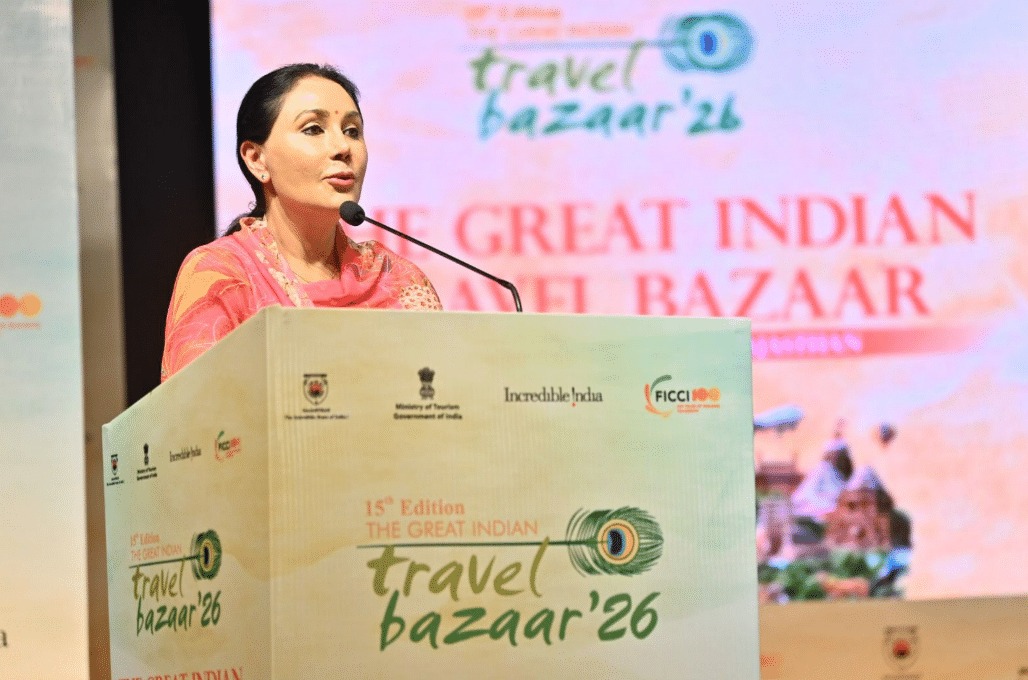
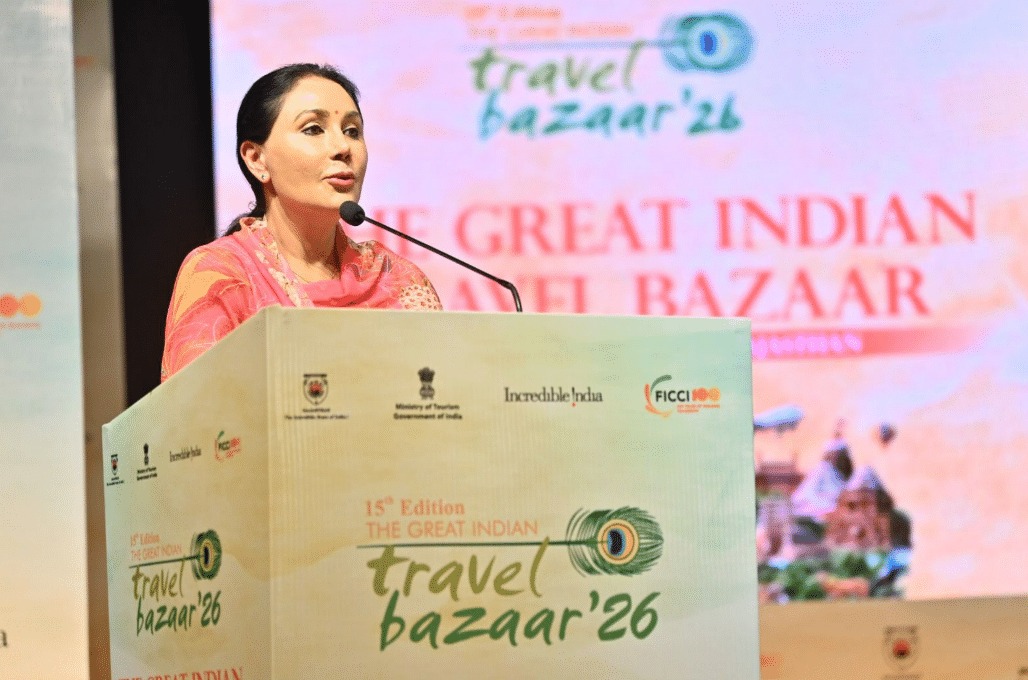
“Higher cost of accommodation, transportation and taxes are the reason India is often perceived as an expensive destination in comparison to countries such as Thailand and Vietnam. India currently levies 5% GST is for room tariffs between Rs.1,000 and Rs.7,000 and 18% for tariffs above Rs.7,500. The 18% tax on higher tariff categories impact overall price competitiveness particularly for international travelers. A reduced GST of 9% for tariffs above Rs.7,500 will enhance value perception, improve affordability across segment and better align India with competitive destinations,” said the report, which was released at 3-day long Global India Tourism Bazaar 2026 being organized from April 26-28, 2026.
Structural gaps limiting global appeal
The report also identifies key structural challenges constraining India’s global competitiveness — fragmented state-led branding, limited global marketing outreach, lack of experience-led packaging, and ease-of-travel barriers including connectivity and visa processes.
A roadmap towards ‘Incredible India 4.0’
The insights and recommendation forms part of EY India and FICCI’s latest report titled “Reimagining Inbound Tourism in India: Trends, Technology & Transformational Opportunities – Towards Incredible India 4.0,” which presents a comprehensive and forward-looking roadmap to unlock India’s inbound tourism potential, advocating a decisive shift from a fragmented, destination-led approach to a unified, experience-driven tourism ecosystem. The report presents a bold strategic vision — transforming India’s positioning from “a country with many destinations” to “a destination with infinite experiences” — built on six interconnected imperatives: branding, pricing, experience, infrastructure, policy, and technology.
The inbound tourism paradox
India’s tourism landscape reflects a striking paradox — strong domestic demand yet a persistent inbound gap, with foreign tourist arrivals at approximately 9.9 million in 2024, modest against competing destinations. The tourism sector currently contributes approximately Rs.21 trillion to GDP and supports over 46 million jobs. With a hospitality pipeline exceeding 1,00,000 rooms, the report notes that supply growth must align with international demand to ensure sustainability.
Experience-led travel emerges as the next frontier
India’s tourism landscape is undergoing a powerful transformation, with experience-led and high-value segments emerging as the next big growth frontier. From Sports and Culinary Tourism to Spiritual Wellness, Wildlife, and Event-led Travel, India’s diverse offerings are increasingly capturing global imagination. India’s live entertainment sector surpassed Rs.12,000 crore (US$ 1.28 billion) in 2024, projected to grow at 19% CAGR over three years, making festivals, concerts, and sporting events powerful inbound drivers. AI and digital platforms are redefining travel discovery, while the rise of Gen Z, women, and solo travellers signals a fundamental shift in traveller profile that India must be equipped to serve.
A pivotal moment for global positioning
India stands at a pivotal moment in its tourism journey, and enhancing price competitiveness is central to unlocking its true potential on the global stage. By addressing cost dynamics around accommodation, taxation, and transport, India can position itself as a compelling value destination against its Southeast Asian counterparts. International visitor spending — projected to grow at 5.5% per annum to reach US$ 2.95 trillion by 2034 — represents the most compelling growth opportunity ahead.
Conclusion
With coordinated policy interventions, competitive pricing structures, and a shift towards unified, experience-driven tourism delivery, India is well-positioned to convert its unparalleled diversity into a decisive global tourism advantage.