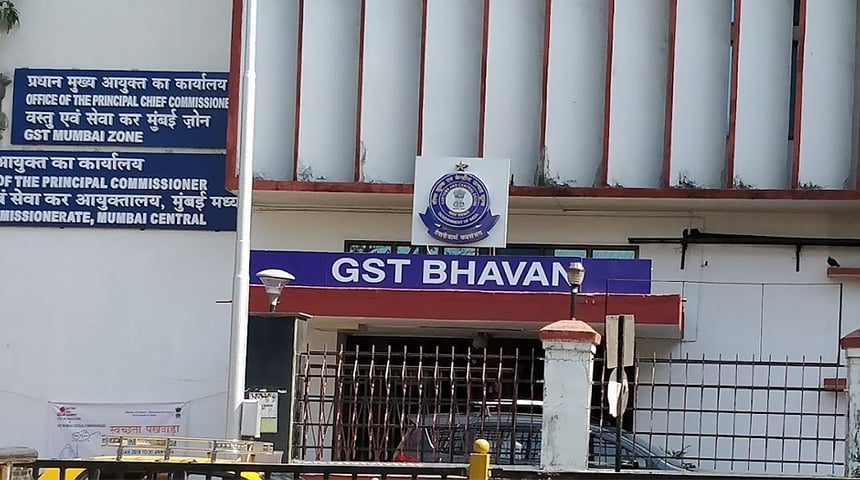



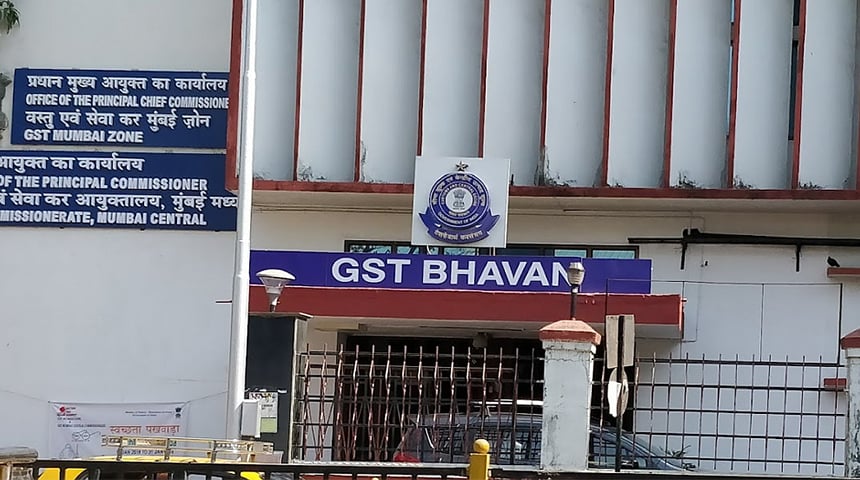
Bombay HC Slams ‘High-handed’ GST Action, Strikes Down Bank Account Freeze, Officer Fined Rs.25,000
In a sharp rebuke to tax authorities, the Bombay High Court (HC) has set aside the provisional attachment of bank accounts of Mumbai-based Nivara Infradevelopers LLP, calling the action arbitrary, legally unsustainable and an 'apparent abuse of powers'. In a rare move, the HC directed the joint commissioner of state tax (investigation-A) for goods and services tax (GST) to personally deposit Rs.25,000 as costs, citing 'apparent abuse of powers' and conduct that effectively took the 'rule of law to ransom'.
A division bench of justice Girish S Kulkarni and justice Aarti Sathe, held that the coercive action of freezing bank accounts without following due process violated statutory safeguards and constitutional rights. "The petitioner had not only furnished correct legal information but also provided an alternate security to avoid such drastic action of attachment of the petitioner’s bank account. However, the officer remained satisfied on maintaining such attachment. Thus, the whole approach of the concerned officer was of unwarranted coercion by attaching the bank accounts and that too without issuance of a show cause notice. Such attachment has continued to operate for three months depriving the Petitioner of the valuable right guaranteed under Article 300A of the Constitution of India apart from the petitioner being put to a live death on the business being brought at a standstill. This has certainly resulted into civil consequences and serious prejudice to the Petitioner in complete breach of the principles of law."
"In this view of the matter, while we set aside the impugned attachment orders, the joint commissioner of state tax, investigation-A is directed to deposit an amount of Rs.25,000 as costs with the secretary, Maharashtra state legal services authority, high court premises, Mumbai within a period of two months from the date a copy of this order is made available," the order says.
Allowing the petition filed under Article 226 of the Constitution, the HC quashed the attachment orders dated 23 January 2026, issued under Section 83 of the GST Act.
The bench emphasised that provisional attachment under the GST law is a 'draconian' measure and must be exercised strictly in line with legal requirements.
Referring to the Supreme Court’s ruling in the Radha Krishan Industries case, the HC reiterated that authorities must form a clear, reasoned opinion based on tangible material before invoking such powers.
“The impugned actions are in violation of the law and an apparent abuse of the powers which are vested with the authorities,” the HC observed, adding that there cannot be any 'conscious departure' from mandatory legal procedures.
The case arose after GST authorities froze Nivara Infradevelopers’ accounts held with Punjab National Bank and Saraswat Co-operative Bank on 23 January 2026.
The Court noted that a pre-attachment notice (Form GST DRC-23) and the actual attachment orders were issued on the same day, effectively bypassing the statutory safeguards.
It found 'absolute vagueness' in the pre-intimation notice and held that the authorities had failed to form any valid opinion justifying the attachment.
Significantly, the bench held that such coercive action without due process infringes the right to property under Article 300A of the Constitution.
The Court observed that the attachment continued for nearly three months, bringing Nivara Infradevelopers’ business operations to a halt and causing severe civil consequences.
Describing the impact, the bench said the action had put the firm to a 'live death' by bringing its business to a standstill.
The company had challenged the action as arbitrary and high-handed, pointing out that it had filed detailed objections on 30 January 2026, and even offered alternate security.
However, the authorities failed to consider the representation and continued with the attachment.
The Court took serious note of this, stating that such conduct reflected 'unwarranted coercion' and disregard for settled legal principles.
In strong observations, the bench cautioned tax officers against the misuse of statutory powers.
“Such powers cannot be exercised in a high-handed manner or for extraneous considerations,” the court says, warning that arbitrary action undermines the rule of law.
The judges further remarked that if officers adhere to legal procedures, a majority of tax litigation could be avoided.
“It is difficult to believe that officers vested with such draconian powers are not aware of how the same is required to be exercised,” the Court noted.
While quashing the attachment, the High Court clarified that authorities are free to initiate fresh proceedings in accordance with the law.
It permitted the department to issue a proper show-cause notice (SCN) within six weeks, provided it is supported by tangible material and follows due process.